

Most discussions about light in flower photography begin with technical advice. They explain when to photograph, which weather conditions produce softer illumination, or how to position the camera relative to the sun. While these considerations are certainly useful, they describe how to manage light rather than how to truly observe it.
In artistic flower photography, light becomes something more than illumination. It defines relationships between forms, reveals subtle transitions, directs attention, and influences the emotional atmosphere of an image. A flower does not simply become brighter when illuminated. It becomes visually different.
The same flower photographed under changing light can appear delicate, mysterious, sculptural, or almost abstract without changing its shape or colour. What changes is the way light allows us to perceive those forms.
Learning to see flowers through light therefore begins long before pressing the shutter. It begins with recognising that light is not simply revealing the subject—it is actively shaping the photograph itself.
Topics
Light Reveals More Than Detail
One of the greatest misconceptions in flower photography is that stronger light simply reveals more detail. In reality, light also determines which details become important and which quietly disappear.
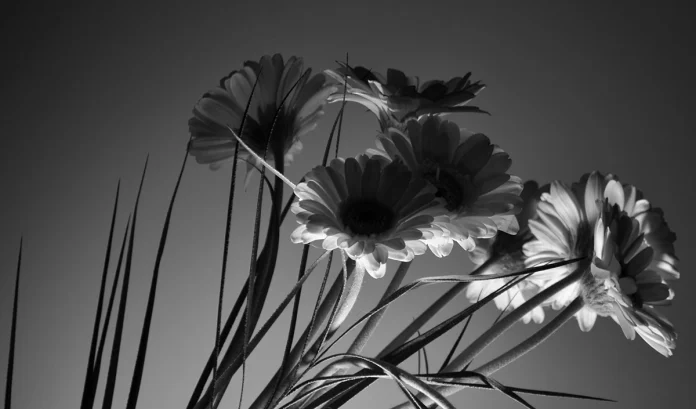
Soft illumination allows gentle tonal transitions to emerge across petals, while directional light emphasises structure, texture, and depth. Backlighting can transform translucent petals into luminous forms, whereas diffused light may dissolve sharp edges and encourage a quieter visual experience.
Because of this, light acts less like a spotlight and more like a visual editor. It selects certain relationships while allowing others to fade into the background. Rather than recording every visible feature equally, artistic photography often benefits from this selective way of seeing.
When observing flowers through light, the question is no longer “How much detail can I capture?” but rather “Which visual relationships does this light allow me to discover?”
Light is only one of the many creative elements that shape floral imagery. Explore more artistic approaches in our comprehensive guide to Flower Photography Ideas.
Following the Direction of Light
Flowers do not respond to light in a single way. A slight change in the direction of illumination can completely alter how their form, texture, and visual presence are perceived. Although the flower itself remains unchanged, the photograph may tell a very different visual story.
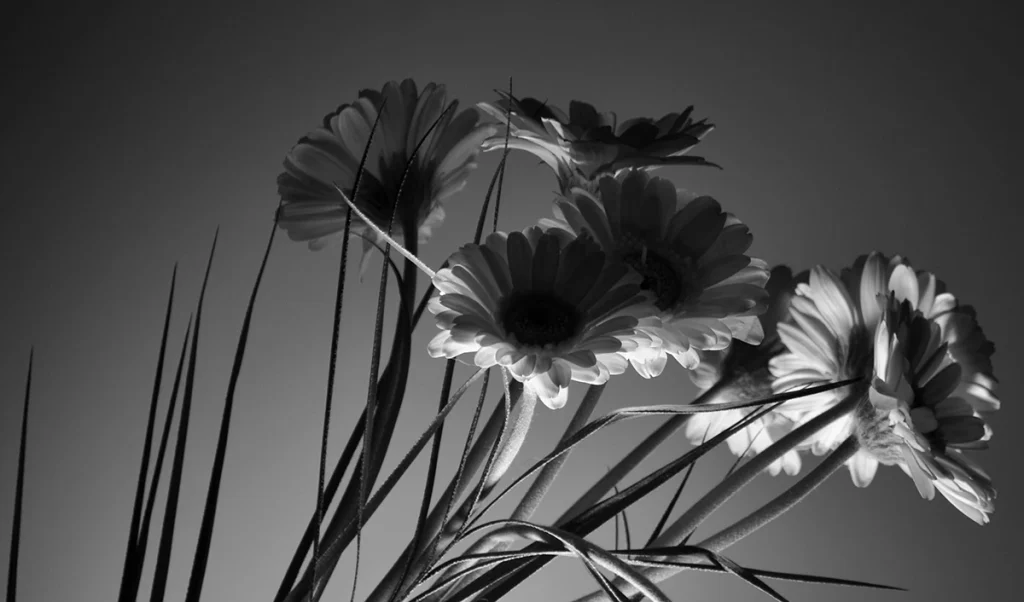
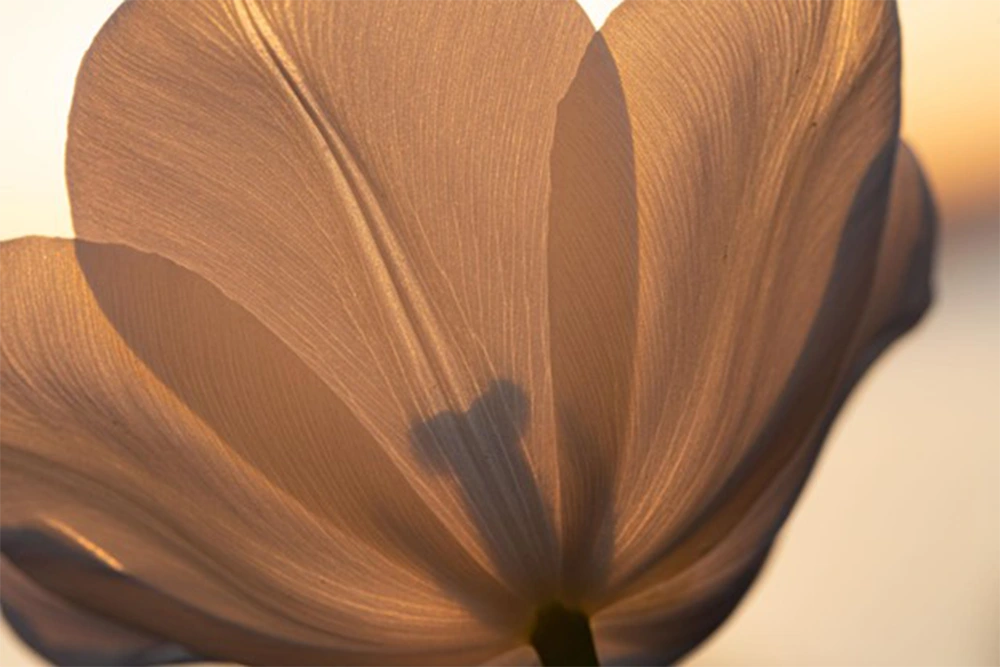
Front lighting often presents flowers with clarity and evenness, allowing colours and details to appear familiar and balanced. Side lighting introduces dimension by revealing gentle transitions between light and shadow, giving petals a stronger sense of depth and structure. Backlighting transforms translucent petals into luminous surfaces, making light appear to originate from within the flower itself rather than falling upon it.
These differences are not simply technical variations. They influence how viewers experience the image. Directional light can guide attention toward particular forms, simplify complex arrangements, or encourage the eye to move naturally through the composition.
For this reason, observing the direction of light becomes an act of visual interpretation rather than exposure control. Before changing camera settings, photographers can pause to notice how moving only a few steps around a flower changes the relationship between light, shadow, and form. Often the most expressive photograph is created not by changing the subject, but by changing the way light interacts with it.
Changing light also changes atmosphere. Explore how mood emerges through light, colour, and visual relationships in Moody Flowers.
When Light Creates Simplicity
Light is often associated with revealing information, yet it can be equally powerful in removing it.
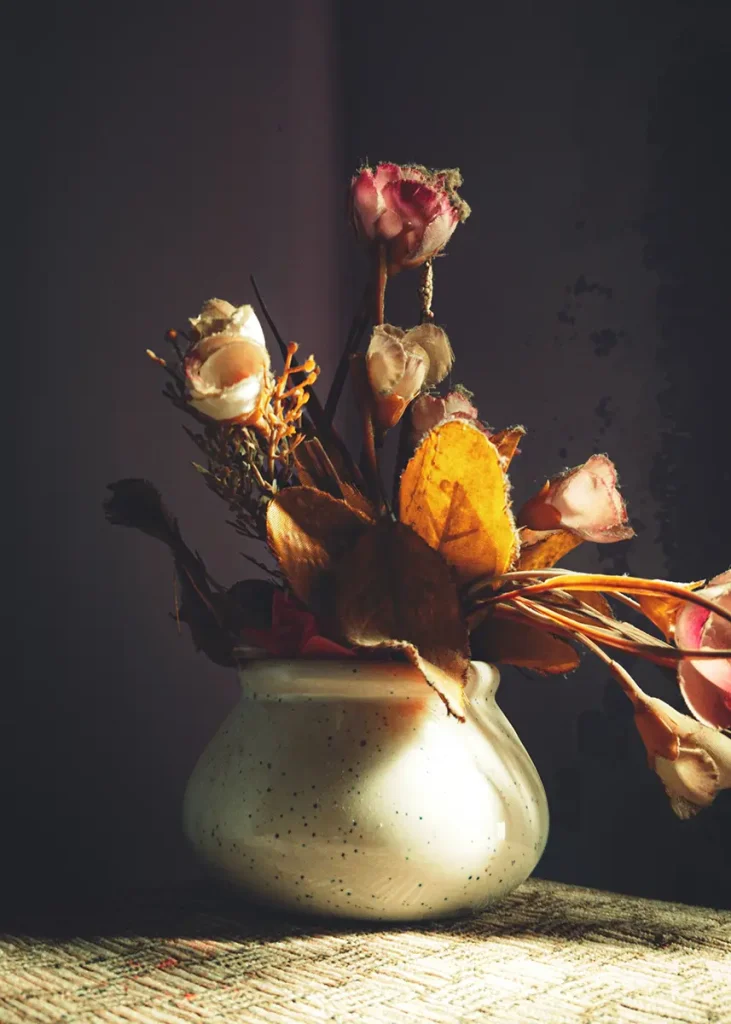
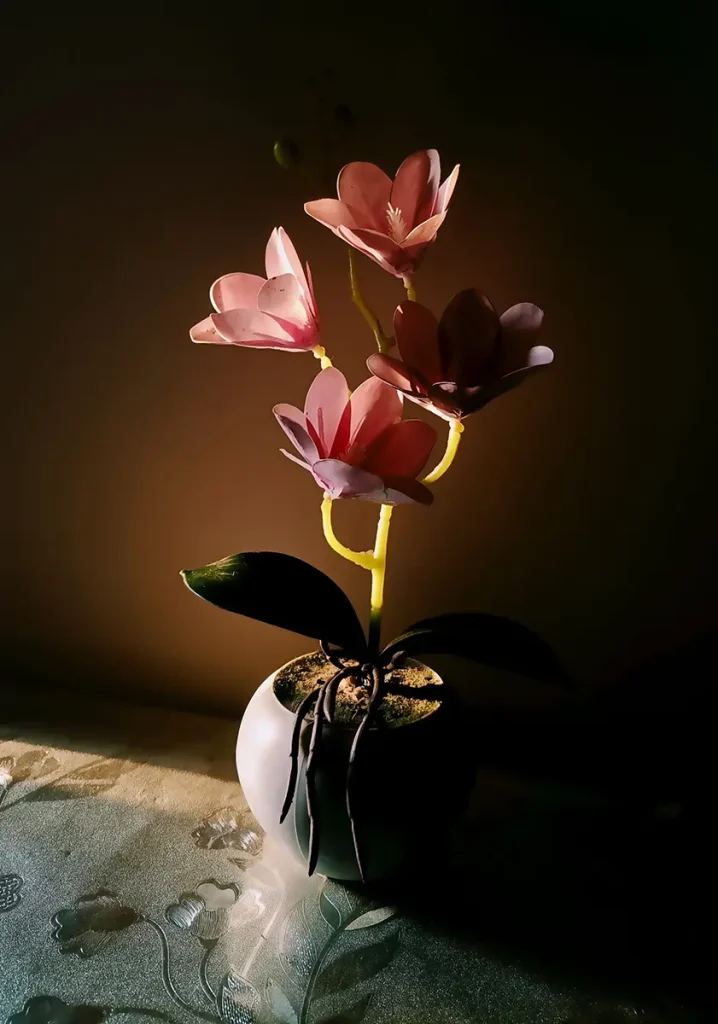
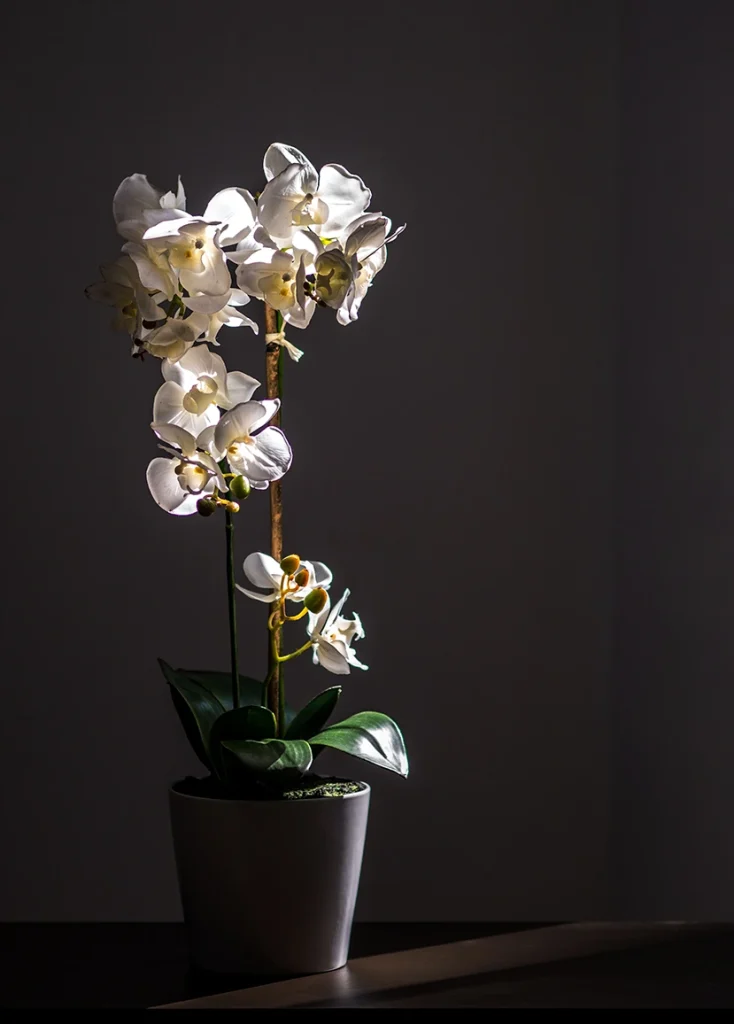
Not every photograph benefits from showing every visible detail. As light changes, certain parts of a flower become visually prominent while others gradually disappear into softer tones or shadow. This natural reduction can simplify a composition without removing anything from the scene itself.
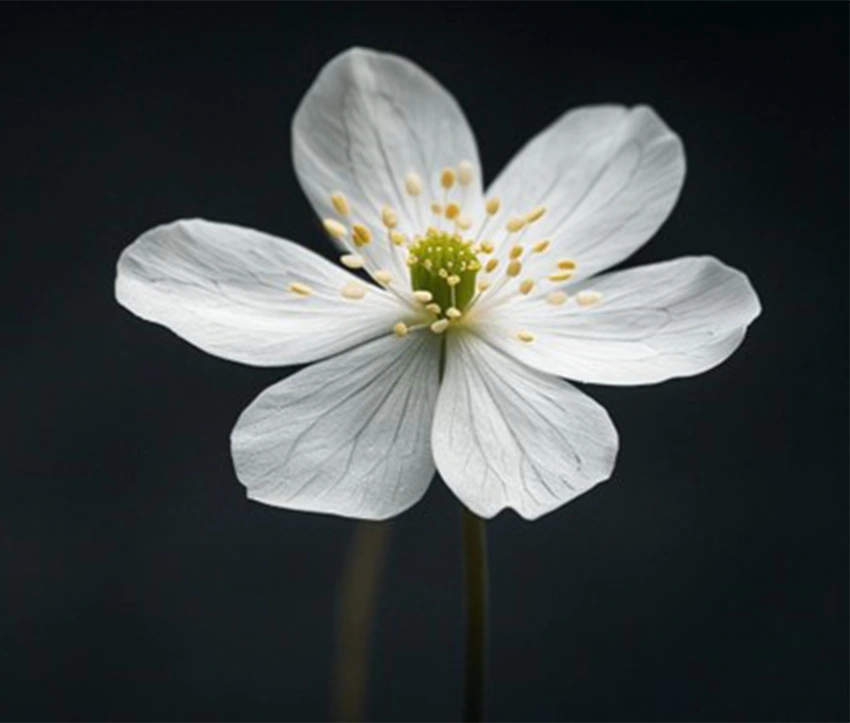
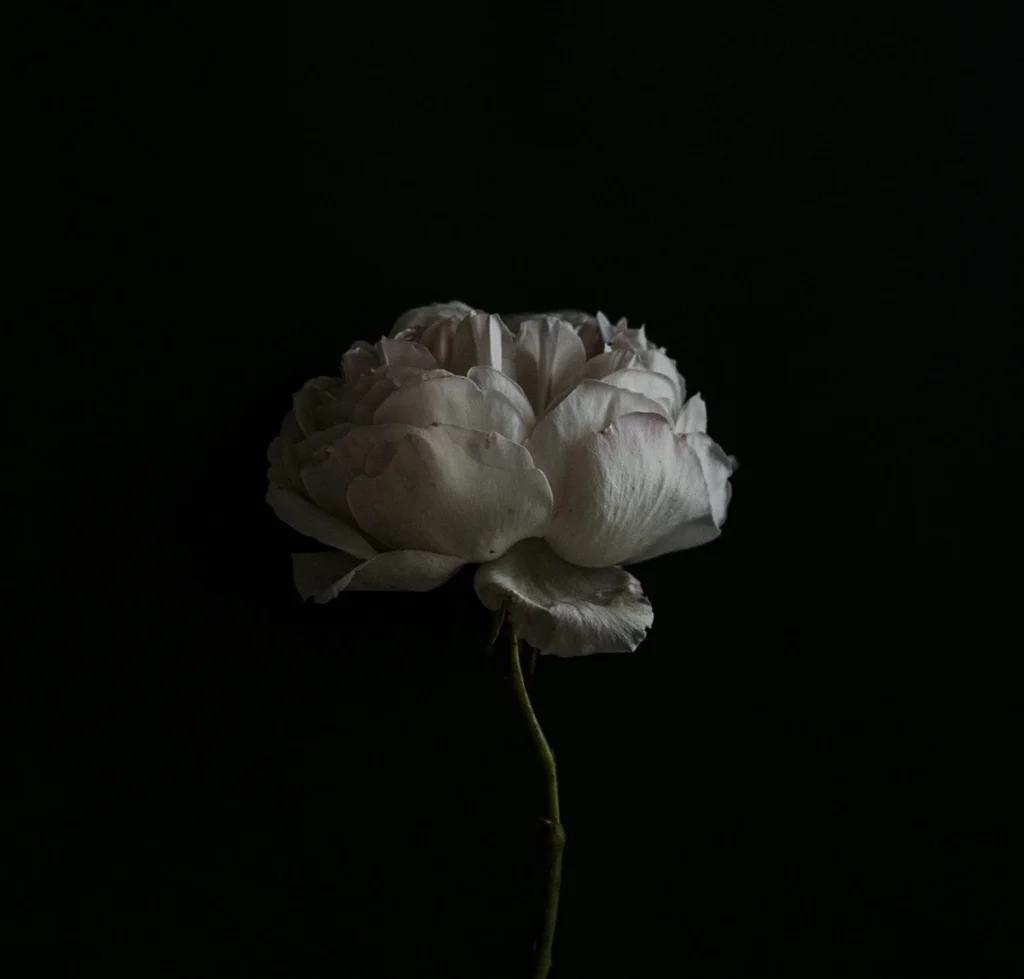
A single illuminated petal against a darker background may communicate more clearly than an evenly lit flower surrounded by distracting detail. Likewise, gentle illumination can separate one flower from a busy environment, allowing attention to settle naturally on its essential form.
Rather than adding visual complexity, carefully observed light often reduces it. The photograph becomes quieter, cleaner, and more focused—not because less exists, but because light has chosen what deserves to be seen first.
Light often simplifies a photograph by allowing shadows to quietly remove unnecessary detail. Explore this relationship further in Flowers in Shadow.
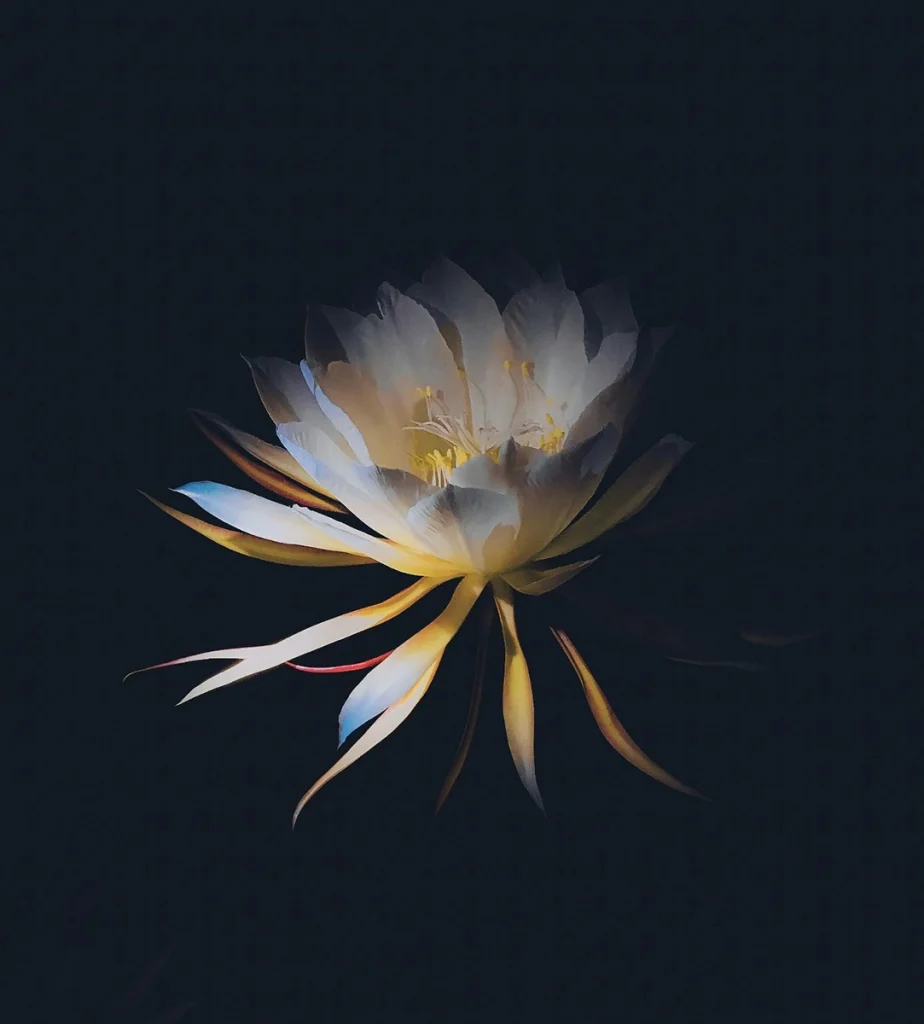
Changing Light Changes the Photograph
It is easy to think that returning to the same flower will produce the same photograph. In reality, light ensures that no two observations are ever completely identical.
Morning light often reveals flowers with gentle clarity, while the stronger light of midday may flatten subtle tonal relationships. Late afternoon introduces longer shadows and warmer transitions, and an overcast sky can transform vivid colours into quieter harmonies. None of these conditions changes the flower itself, yet each creates a distinctly different visual interpretation.
For this reason, many memorable flower photographs are less a result of discovering unusual subjects than of returning to familiar ones under different light. A flower observed across changing weather, seasons, or times of day gradually reveals possibilities that remain invisible during a single visit.
Light therefore encourages patience. Instead of searching constantly for new locations, photographers may discover that familiar flowers continue offering new visual experiences simply because light never repeats itself in exactly the same way.
See how light, form, and atmosphere come together across our Artistic Flower Photography collections.
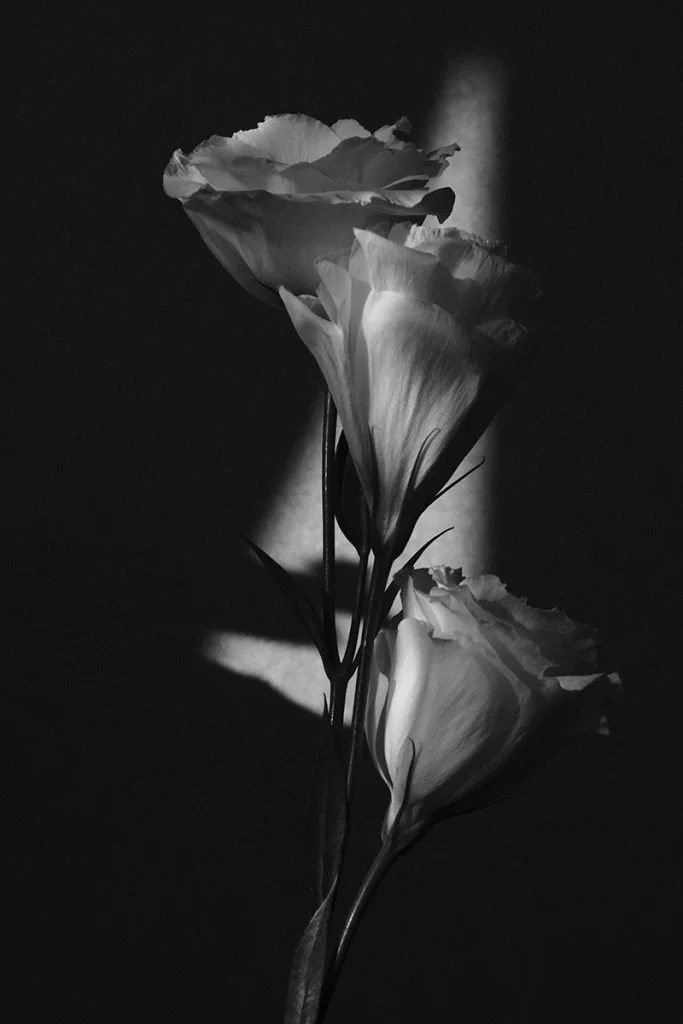
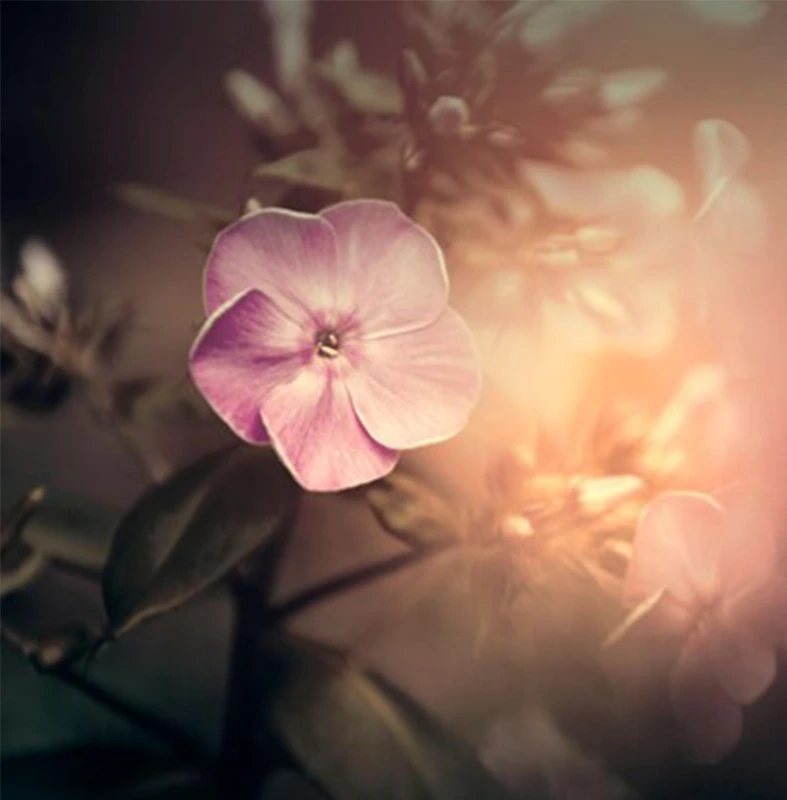
Learning to Observe Before Photographing
Perhaps the greatest influence of light lies not in exposure but in observation.
Before composing a photograph, before adjusting focus, and even before choosing a lens, photographers can simply spend time watching how light moves across a flower. A slight shift in the sun, the passing of a cloud, or a change in viewing position may completely transform the visual relationships within the scene.
This slower approach encourages a different kind of photography. Rather than trying to control every element, the photographer begins to collaborate with naturally changing light. Observation becomes part of the creative process itself.
Over time, this habit changes more than individual photographs. It changes the way flowers are seen. Instead of recognising only botanical subjects, photographers begin noticing transitions, reflections, transparency, rhythm, and quiet tonal relationships that might otherwise pass unnoticed.
Learning to see flowers through light therefore means learning to observe before making the photograph. The camera records only the final moment, but artistic interpretation begins much earlier—with attention.
Careful observation also reveals how gentle transitions of light contribute to softness in floral imagery. Continue exploring this idea in Finding Softness in Flower Photography.
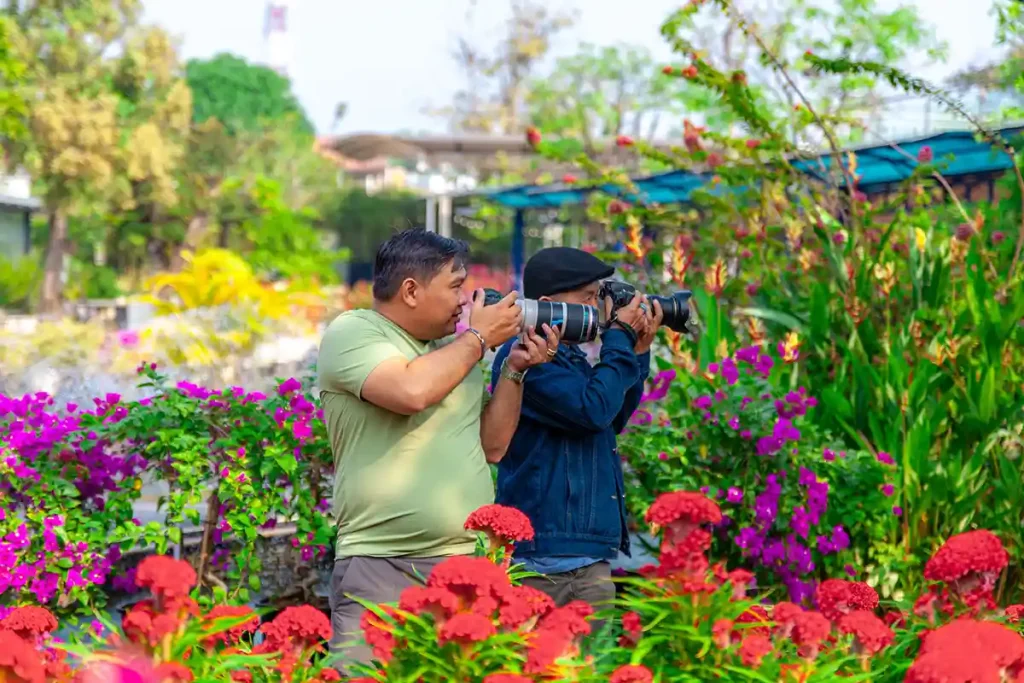

Conclusion
Light is often described as the foundation of photography, yet its role extends far beyond making a subject visible. It shapes form, influences atmosphere, simplifies complexity, and continually changes the way familiar flowers are perceived.
Seeing flowers through light is therefore not a technical skill alone. It is a way of observing. By paying closer attention to changing illumination, photographers begin discovering visual relationships that remain hidden when light is treated merely as a source of brightness.
The flower itself may remain unchanged, but every shift in light offers another interpretation. In this sense, light does not simply reveal the photograph—it becomes part of its artistic language.
Discover more visual interpretations and creative perspectives in our Flower Photography collection.
